The work starts well before the main excavation
A two-acre pond sounds straightforward until you look at everything that has to happen around the hole. Trees and brush may occupy the footprint. Stumps and roots remain below the surface. Equipment needs room to work, excavated dirt needs a destination, and wet ground can change the entire sequence.
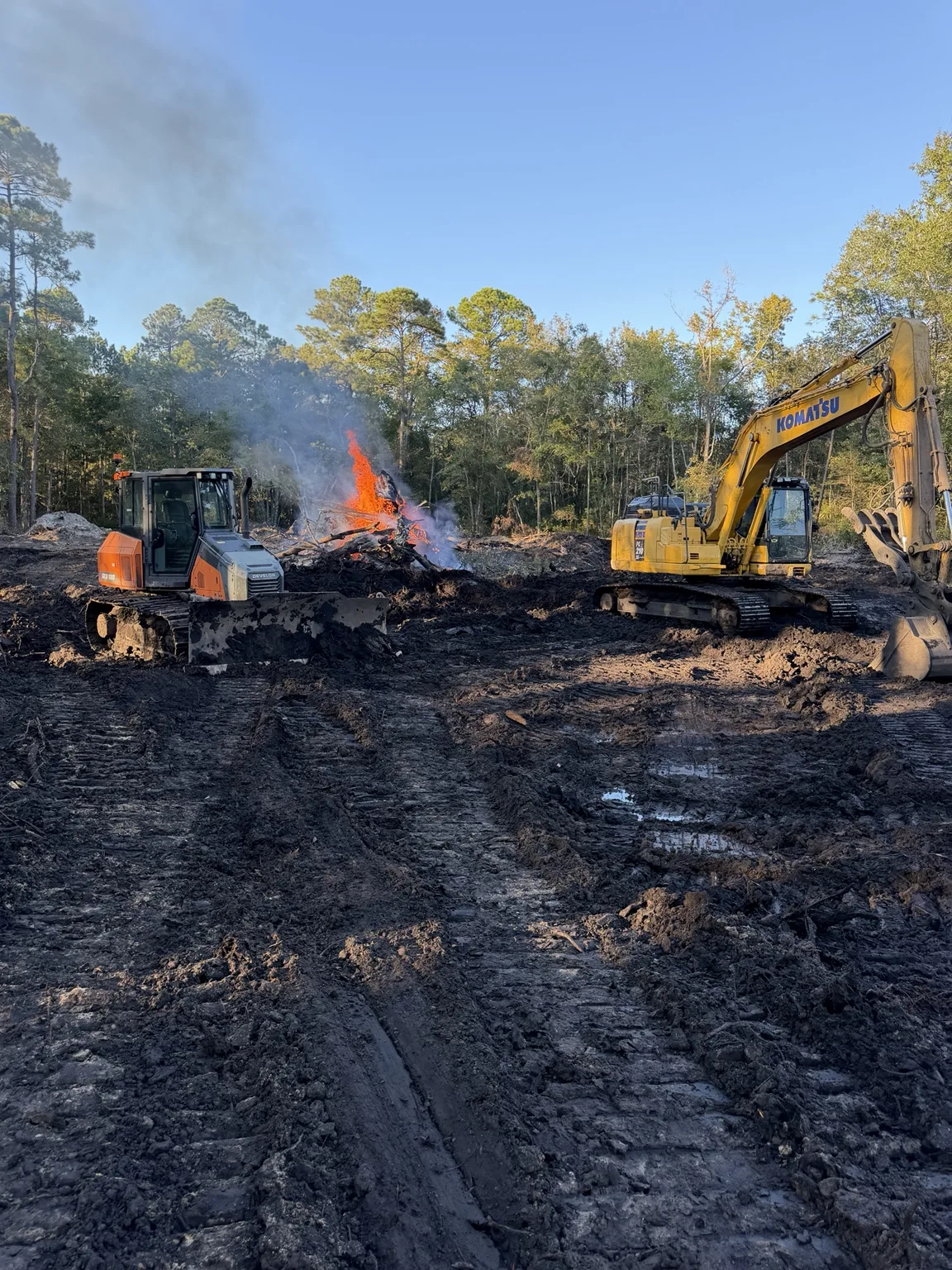
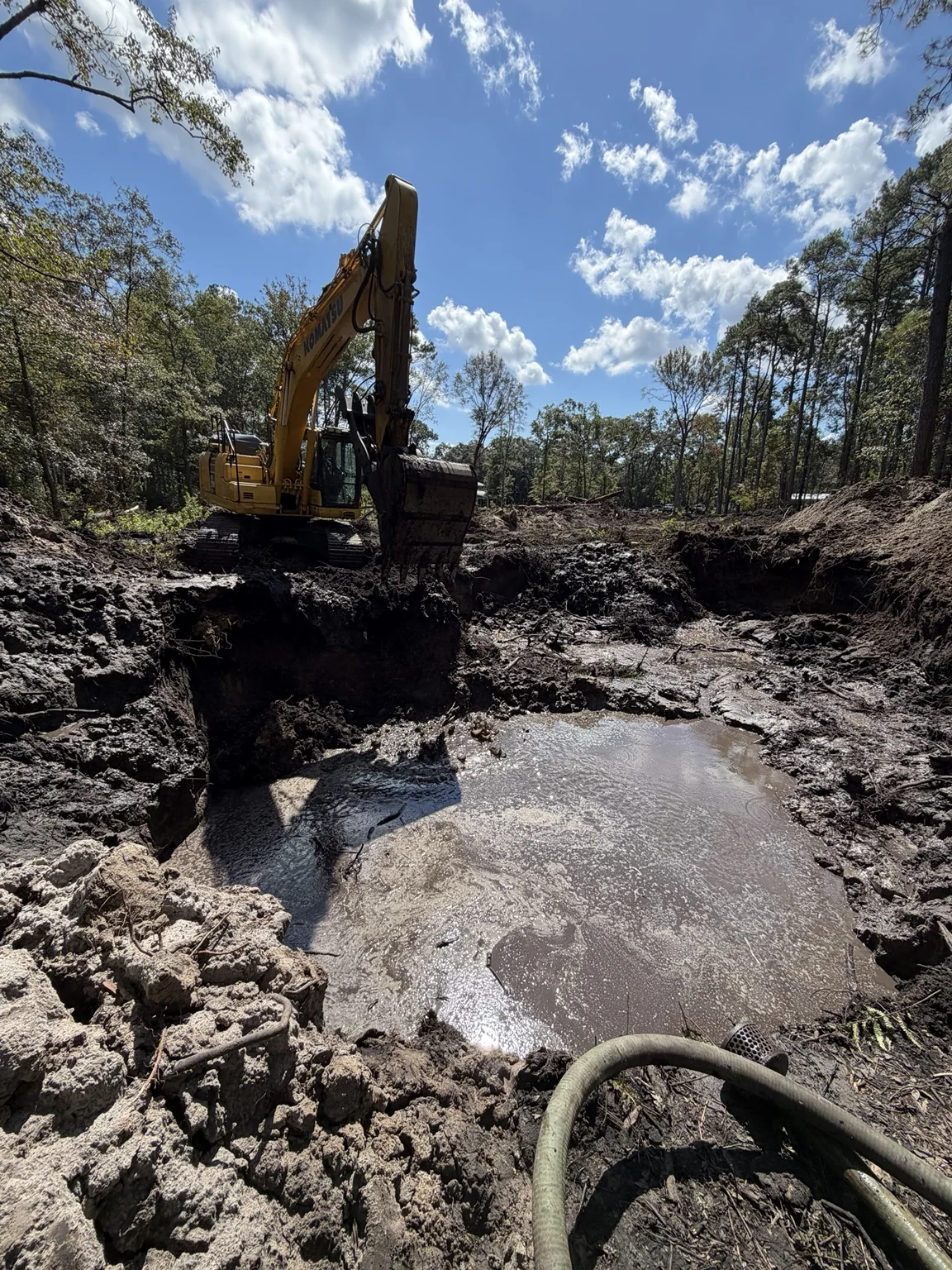
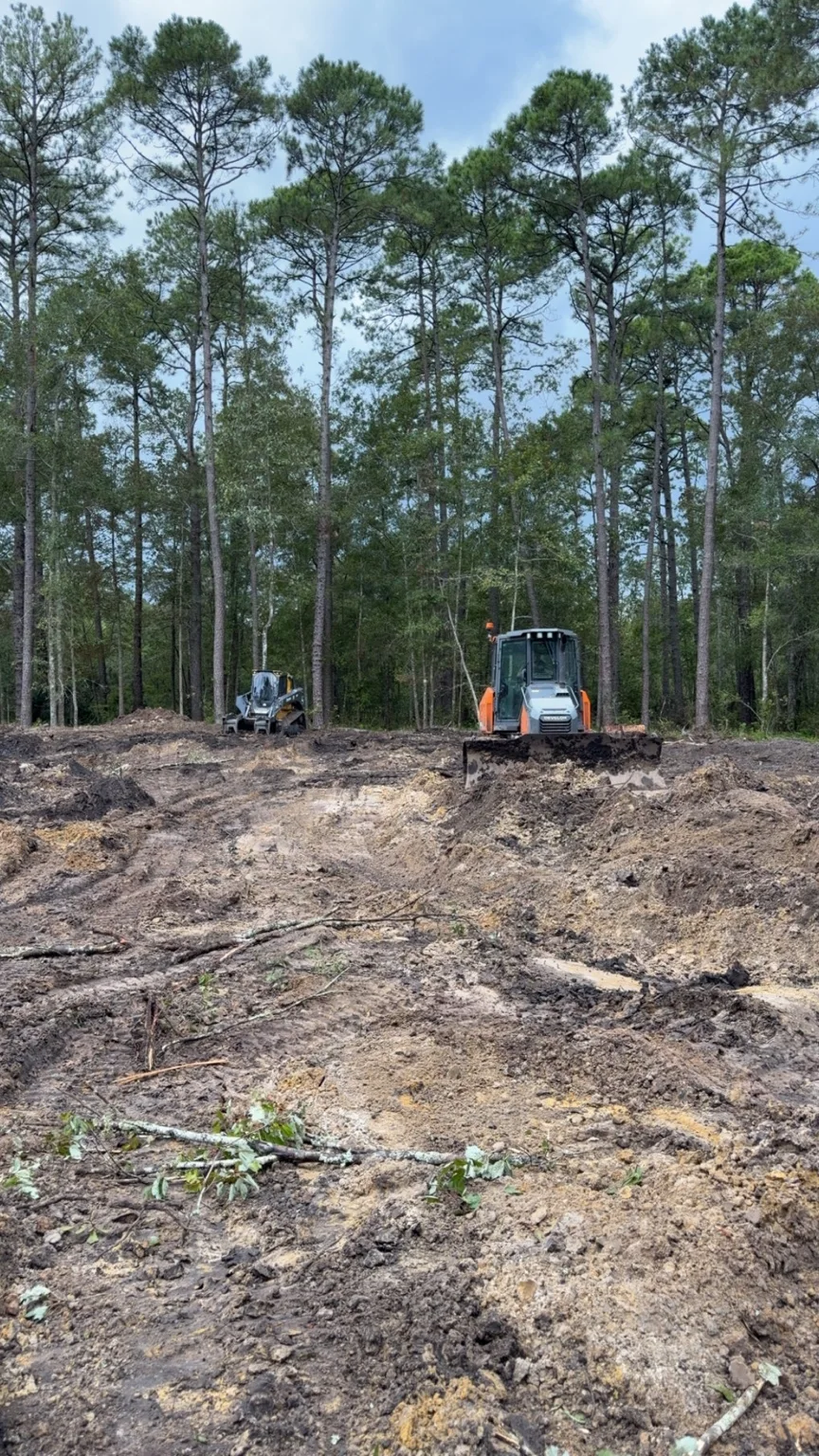
Jennings Land Management carried out preparation work for a planned two-acre pond in Statesboro, Georgia. The photos here are from that project. They show opened ground, earthmoving equipment, vegetation debris, and standing water in part of the work area. They capture the preparation stage; they do not show a finished pond.
Below is a detailed look at the decisions and work that can go into pond preparation. The exact scope depends on the property and design. Soil testing, engineering, permit approvals, final depths, and the completed pond are not documented here as completed tasks on this particular job.
1. Decide what the pond is meant to do
The first useful conversation is about the pond’s purpose. A pond for fishing, irrigation, livestock, drainage, or appearance can involve different expectations for water supply, shoreline access, depth, and maintenance. Those decisions influence where the pond belongs and how it should be built.
“Two acres” also needs a clear definition: does that mean the intended water surface, the excavation footprint, or the total work area? Those are different measurements. The finished waterline, slopes, access route, and dirt-storage areas should be understood before the clearing limits are marked.
It is also worth deciding which trees or views the owner wants to preserve. Moving a proposed edge on a drawing is easier than changing the plan after trees have been removed and material has been stockpiled.
2. Walk the property and establish the working limits
A site walk connects the owner’s idea to the actual ground. The team needs to understand property boundaries, access points, nearby improvements, overhead obstacles, existing drainage, and where equipment can turn or unload. Utility locations and any private lines need to be addressed before ground disturbance.
The plan should identify the proposed pond, the surrounding work zone, the route into it, and places for soil and vegetation. A narrow entrance or an obstacle on the only haul route can become a daily bottleneck once excavation starts.
Clearing two acres for water does not necessarily mean disturbing only two acres in total. Construction may need additional room for stockpiles, equipment movements, and the final shoreline. That extra area should be planned deliberately, with retained vegetation and property limits respected.
3. Resolve site approvals before clearing and excavation
Before work begins, determine which local, state, or federal reviews apply to the specific property. Pond work can involve land disturbance, water features, buffers, wetlands, or an embankment, depending on the location and design. Do not assume that calling a project a farm pond automatically establishes an exemption.
Georgia EPD publishes erosion and sedimentation resources, construction stormwater information, and pond-building guidance. The owner and project team should confirm applicable requirements with the relevant authorities before disturbance. These photos do not establish the permit status of the Statesboro project.
4. Clear vegetation and make a debris plan
On a wooded site, the first visible phase can be removing trees and brush from the approved work area. But cutting vegetation is only part of that scope. The crew also needs to gather it, separate useful material where appropriate, and keep it from obstructing the next operation.
Debris piles need a planned location. A pile placed where the next dirt stockpile or equipment lane belongs can force the crew to handle it twice. The disposal method also needs to be included in the scope rather than left for the end of the job.
One project photo shows a burning vegetation pile. That records what is visible in the photo; it is not a recommendation to burn on every site. Disposal options and any applicable burn requirements must be resolved for the individual project.
5. Address stumps, roots, and buried organic material
A property can look cleared while still containing extensive below-ground material. Removing trees above ground does not remove their root systems. For pond preparation, the work scope needs to address what happens to stumps and roots in the excavation and any areas intended for constructed fill.
This is why forestry mulching and complete clearing are different services. Mulching can make an overgrown area more accessible, but it does not automatically deliver the ground conditions needed for pond construction. The required finish should follow the pond design and earthwork plan.
Ask whether the clearing estimate includes stump removal, root handling, cleanup, and disposal. Also establish what happens if buried debris or unexpected unsuitable material is encountered. A clear written scope prevents “cleared” from meaning one thing to the owner and another to the contractor.
6. Understand soil and water conditions
The surface of a property does not tell the whole story below it. Appropriate investigation is needed to understand the soil layers, water conditions, and whether the planned pond can perform as intended. Those findings can affect the design, material selection, and construction sequence.
The USDA Natural Resources Conservation Service pond handbook discusses site surveys, soil investigation, excavated ponds, and sealing methods. It is a useful planning reference, but the actual project needs decisions based on its own conditions rather than a photograph or a standard recipe.
The Statesboro photos show standing water and wet ground in one part of the work area. That observation does not establish the water table, soil classification, or the pond’s ability to retain water. It does show why water management belongs in the preparation discussion.
7. Make equipment access part of the job
The excavation equipment needs more than a path wide enough to enter. The work plan should account for unloading, turning, moving around the footprint, and maintaining access as the ground changes. If trucks or other hauling equipment are involved, their route matters too.
Wet areas, repeated traffic, and a constricted entrance can interrupt production. An access plan should identify where machines can operate, which areas need improvement, and how the route will be maintained during the job.
A dozer, excavator, and track loader can contribute to different parts of the preparation process. Choosing the equipment around the terrain and task is more useful than selecting it solely from the intended pond acreage.
8. Separate topsoil and plan the excavated dirt
Topsoil and excavated material should not become one unplanned pile. Decide what is being saved, where it will go, and what the final grading will require. The NRCS handbook describes saving sod and topsoil for later use in pond construction areas.
Some material may be suitable for a planned use; other material may require different handling. Suitability should be assessed for that use rather than assumed. A stockpile location should leave equipment access open and avoid interfering with drainage or the next phase of work.
For a two-acre project, dirt placement can be a major part of the operation. Nearby placement, long-distance movement within the property, and off-site hauling involve different workloads. Decide whether the scope includes spreading, grading, compaction where specified, or only stockpiling.
How much material can a two-acre footprint involve?
Two acres equal 87,120 square feet. As a simple scale illustration, removing a uniform one-foot layer over that entire area would produce about 3,227 cubic yards of material in place: 87,120 ÷ 27. That is a mathematical example, not the measured excavation quantity for this Statesboro project.
A real pond has slopes, changing elevations, and a designed shape. Its excavation quantity requires those details, and loose stockpile volume can differ from material measured in the ground. Surface acreage alone is therefore not enough to price the dirt handling or estimate truckloads.
9. Plan drainage, water handling, and final elevations
Before the main excavation, the project needs a plan for water entering the work area and for the pond’s eventual inlet, outlet, overflow, and finished surrounding grades as applicable. Water-management decisions belong in the design, not as an afterthought once a low spot fills.
Where temporary pumping is necessary, the discharge location and sediment controls need to be considered. Moving water out of an excavation is only part of the problem; where it goes matters to the rest of the property and neighboring areas.
The wet-ground photo includes a hose in the foreground. It illustrates water-handling equipment at the site, but it does not confirm a pumping rate, discharge arrangement, or the final drainage design.
10. Coordinate erosion control and the finish
Preparation should include the required erosion-control measures and a plan for stabilizing disturbed ground. Access, stockpiles, bare slopes, and drainage routes all need attention during construction. The finish also needs to be defined: final grading, topsoil placement, vegetation establishment, and maintenance access may have separate scope items.
Having that conversation early helps the owner compare complete proposals. An excavation-only number and a proposal including clearing, material handling, water management, and final site work may cover very different jobs.
How long does pond preparation take?
There is no reliable fixed schedule from “two acres” alone. Existing vegetation, root removal, access, wet ground, debris disposal, material placement, design requirements, and weather all influence the work. The preparation on an open, accessible site can differ substantially from a wooded site with standing water.
Ask for a schedule by phase and for the conditions that might change it. A useful estimate explains the assumed site conditions and what happens if the crew encounters something different.
What to send for a Statesboro pond estimate
- The property location and a map showing the proposed pond area.
- Whether two acres refers to the planned water surface or another measurement.
- The pond’s intended use and any existing drawings or design information.
- Photos of trees, brush, the entrance, wet areas, and surrounding ground.
- Information about where excavated dirt could be placed or whether hauling is needed.
- Known utilities, nearby water features, and any approvals already obtained.
- The work you want included: clearing, roots, excavation, dirt placement, and final grading.
We can use those details to discuss the preparation scope and next steps. Read our pond-digging cost guide for more on comparing estimates, or our mulching versus complete clearing guide if the property is wooded.
Pond preparation and excavation in Statesboro, Georgia
A successful pond project needs the preparation and excavation to fit the same plan. Opening the site, defining access, handling vegetation and dirt, and addressing site conditions are all part of getting ready for the main digging phase.
Explore Statesboro pond digging and excavation and Statesboro land clearing. Send Jennings Land Management your location, photos, and pond goals to start a discussion about your property.
Planning references
USDA NRCS: Ponds—Planning, Design, Construction and Georgia EPD: Erosion and Sedimentation. These resources support the planning discussion; they do not document work completed or approvals obtained for this project.