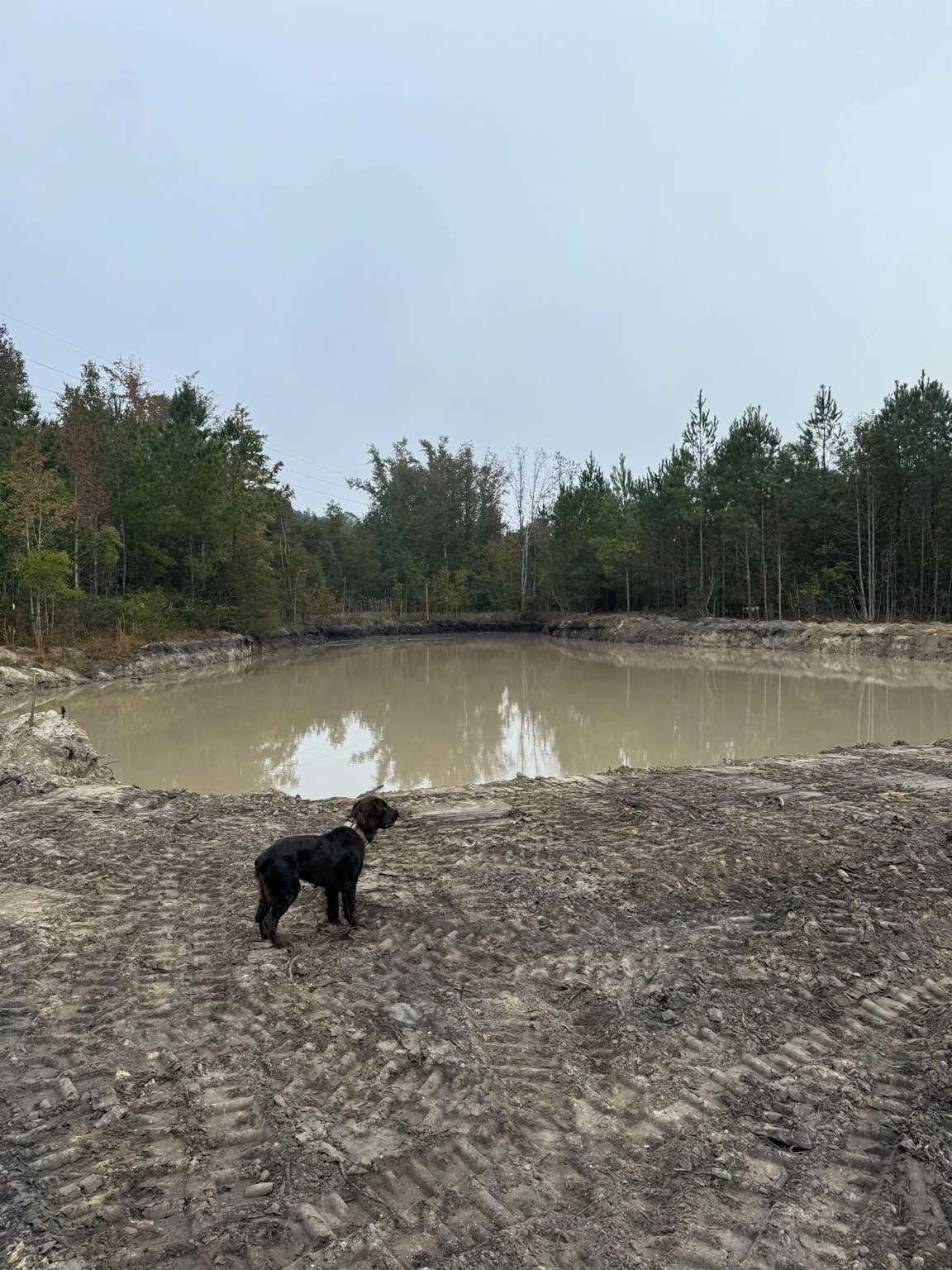
Plan pond work around future improvements
For a Hinesville property, show the proposed pond, equipment access, and any future building or yard areas on a marked layout. Explain whether excavated soil has another intended use and provide available drawings. Keeping those details together helps define excavation and related site preparation without assuming one task includes the other.
Define excavation and material handling together
The proposed dimensions, depth, and side slopes help describe the excavation quantity. Equipment access, site conditions, and the destination of removed soil also affect the scope. If the work includes clearing or grading, identify those limits on the layout so each part of the project is understood.
Details for a Hinesville pond estimate
Send the property address or map location and any available pond plans. Include:
- Pond and future-improvement layout.
- Equipment access.
- Available drawings and soil-use plan.
Can pond dirt be used elsewhere on the property?
It can be discussed as part of the project, but suitability depends on the material and the intended use. Share the destination and any placement or grading requirements. Digging the pond and preparing another area with the excavated soil should each be included in the agreed scope.
Pond excavation in a documented project
Our 13-acre school project in Bluffton, SC included clearing and digging ponds. Excavated dirt was used to raise and grade a football field, with surrounding grading and a topsoil finish. See the photos and description of that specific project.
Planning comes before excavation
Pond function depends on site conditions and the project design, including soil and water supply. Share the available design and approval information when requesting work; an excavation estimate does not establish pond performance or approval to dig.
Explore our pond-digging overview and service-area directory, or discuss land clearing in Hinesville if access or the pond footprint must be opened first.