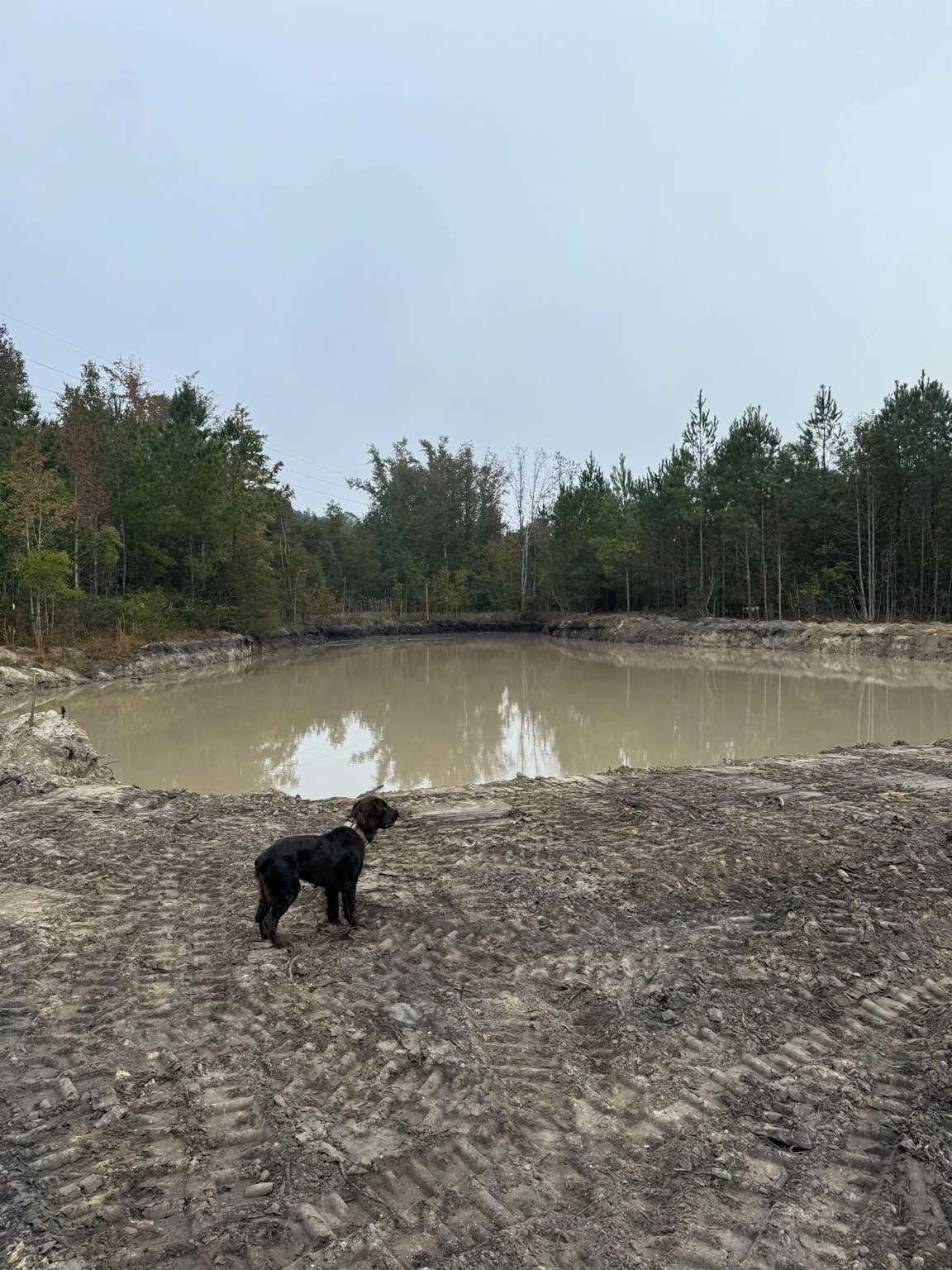
A pond project is more than its surface area
Available dimensions, depth, side slopes, and layout help define the excavation. Soil conditions, water supply, equipment access, and the destination of excavated material are also important planning details. Share the information you already have so the work can be discussed as a defined scope.
Clearing, digging, and handling the soil
If the proposed pond area or equipment route needs clearing, mark those limits on the layout. Explain whether excavated soil stays in a stockpile, is placed elsewhere on site, or needs another handling arrangement. Include any adjacent grading and required finish rather than assuming it is part of digging.
Reuse of excavated dirt
Soil reuse should be discussed with the intended destination and project requirements. Material suitable for one use may not suit another. Pond excavation, moving material, placement, and grading are separate tasks to identify within a combined scope.
Pond excavation in a documented project
Our 13-acre school project in Bluffton, SC included clearing and digging ponds. Excavated dirt was used to raise and grade a football field, with surrounding grading and a topsoil finish. See the photos and description of that specific project.
Information to send for an estimate
- Property location and a marked pond footprint.
- Intended use and available design dimensions.
- Equipment entrance and access-route photos.
- Destination for excavated material.
- Related clearing, grading, and finishing requirements.
- Available project plans, approval information, and preferred timing.
Site planning before digging
Excavation is one part of a pond project. Soil, water supply, design, and applicable project approvals need to be addressed before work begins. An excavation quote does not guarantee water retention or replace the design and approval process. For general planning background, see the NRCS handbook on pond planning, design, and construction.
South Carolina pond-digging service areas
- Pond digging in Beaufort, SC
- Pond digging in Bluffton, SC
- Pond digging in Bowman, SC
- Pond digging in Charleston, SC
- Pond digging in Estill, SC
- Pond digging in Goose Creek, SC
- Pond digging in Hampton, SC
- Pond digging in Hardeeville, SC
- Pond digging in Hilton Head Island, SC
- Pond digging in Holly Hill, SC
- Pond digging in Moncks Corner, SC
- Pond digging in North Charleston, SC
- Pond digging in Okatie, SC
- Pond digging in Orangeburg, SC
- Pond digging in Port Royal, SC
- Pond digging in Ridgeland, SC
- Pond digging in St. George, SC
- Pond digging in Summerville, SC
- Pond digging in Varnville, SC
- Pond digging in Walterboro, SC
- Pond digging in Yemassee, SC
Georgia pond-digging service areas
- Pond digging in Bloomingdale, GA
- Pond digging in Brooklet, GA
- Pond digging in Ellabell, GA
- Pond digging in Guyton, GA
- Pond digging in Hinesville, GA
- Pond digging in Midway, GA
- Pond digging in Pembroke, GA
- Pond digging in Pooler, GA
- Pond digging in Port Wentworth, GA
- Pond digging in Richmond Hill, GA
- Pond digging in Rincon, GA
- Pond digging in Savannah, GA
- Pond digging in Springfield, GA
- Pond digging in Statesboro, GA
- Pond digging in Sylvania, GA